Choosing the Right Fire Extinguisher
As briefly described in Understanding Fire there are several different styles of fire extinguishers each serving a distinct but very important purpose. It is vital to know what type of extinguisher you are using. Using the wrong type of extinguisher for the wrong type of fire can intensify the blaze which could cause life-threatening injuries.
For example, did you ever think about the Class A pressurized water extinguisher sitting beside that large piece of electrically charged industrial equipment in your workshop? If, it were to go up in flames and you or a fellow employee were to use that extinguisher you run the risk of being electrocuted, causing serious bodily harm or worse.
Here's a breakdown of each classification:

Types of Extinguishers
Tackling a fire with the wrong type of extinguisher can be ineffective and dangerous.
Water (H2O) Extinguishers are suitable for class A (paper etc.) fires, but not for class B, C and D such as burning liquids, electrical fires or reactive metal fires. In these cases, the flames will be spread or the hazard made greater.
How it works? Water extinguishers are filled with regular tap water and pressurized with oxygen. The best way to remove heat is to dump water on the fire but, depending on the type of fire, this is not always the best option.
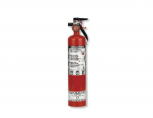
Dry Chemical Extinguishers are useful for class ABC or BC Fires depending on agent inside and are your best all around choice. They have an advantage over CO2 extinguishers in that they leave a blanket of non-flammable material on the extinguished material which reduces the likelihood of re-ignition.
***Although they may look exactly the same, Note that there are two kinds of dry chemical extinguishers!
Type BC fire extinguishers contain sodium or potassium bicarbonate.
(Which will not extinguish a Class A burning Fire)
Type ABC fire extinguishers are filled with a mono ammonium phosphate.
How it works?
Dry chemical extinguishers are filled with a powder, usually mono ammonium phosphate (Class ABC) or sodium/potassium bicarbonate (Class BC), and pressurized with nitrogen. Once engaged and ?shot out? the dry chemical extinguisher interrupts the chemical reaction of the fire by coating the fuel with a thin layer of powder, separating the fuel from the surrounding oxygen.

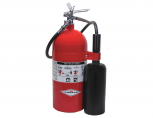
CO2 (carbon dioxide) extinguishers are for class B and C fires. They don't work very well on class A fires because the material usually reignites. CO2 extinguishers have an advantage over dry chemical in that they leave behind no harmful residue -- a good choice for an electrical fire on a computer or other delicate instrument. CO2 extinguishers are not approved for class D fires!
How it works?
CO2 extinguishers contain carbon dioxide, a non-flammable gas, and are highly pressurized. The pressure is so great that it is not uncommon for bits of dry ice to shoot out. CO2 is heavier than oxygen so these extinguishers work by displacing or taking away oxygen from the surrounding area. CO2 is also very cold so it also works by cooling the fuel.
*** Note that CO2 is a bad choice for a flammable metal fires such as Grignard reagents, alkyllithiums and sodium metal because CO2 reacts with these materials.

Class D Fire Extinguishers are designed for fires that involve combustible metals or combustible metal alloys. There are basically two types of applicable extinguishers.
Type A and Type B!
-Type A consists of a dry powder called Sodium Clorhride. Type A is effective in controlling magnesium, sodium, potassium, sodium potassium alloys, uranium, and powdered aluminum metal fires.
-Type B is filled with a copper based dry powder. This is the only known Lithium fire fighting agent which clings to vertical surfaces making it the preferred for three dimensional and flowing fires.
How it works?
Type A's uses the heat from the fire which causes the dry powder agent to cake and form a crust excluding air and dissipating the heat from the burning metal.
Type B's copper compounds smother the fire and provide an excellent heat sink for dissipating the heat from the fire.
![]()
Wet Chemical Fire Extinguishers are labeled with the letter ?K? and are often found in restaurants, cafeterias and caterers. They contain a potassium-acetate based, low PH agent which enables the Class K to extinguish fires that involve vegetable oils, animal oils, or fats in cooking appliances.
How it works?
The Class K extinguishers are specially designed spay a foamy substance onto the fire. This agent coats the fire in a layer of foam which will help to prohibit the fire from flaring back up and reigniting. This is also what makes the Class ?K? extinguisher an integral part of your engineered commercial kitchen suppression system.
![]()
Wheeled Fire Extinguishers are designed with a larger fire in mind. A wheeled unit allows for the transportation of a larger cylinder to the location of a fire. There use should be considered when any of the following circumstances occur;
High agent flow rates are required
Increased agent stream rate is required
Increased agent capacity is needed
Protection of high hazard areas are required
How it works?
Wheeled Extinguishing Units can be filled with many different substances including Dry Chemical, Carbon Dioxide, Class D. They emit a much higher quantity of substance at a much greater rate of speed.